
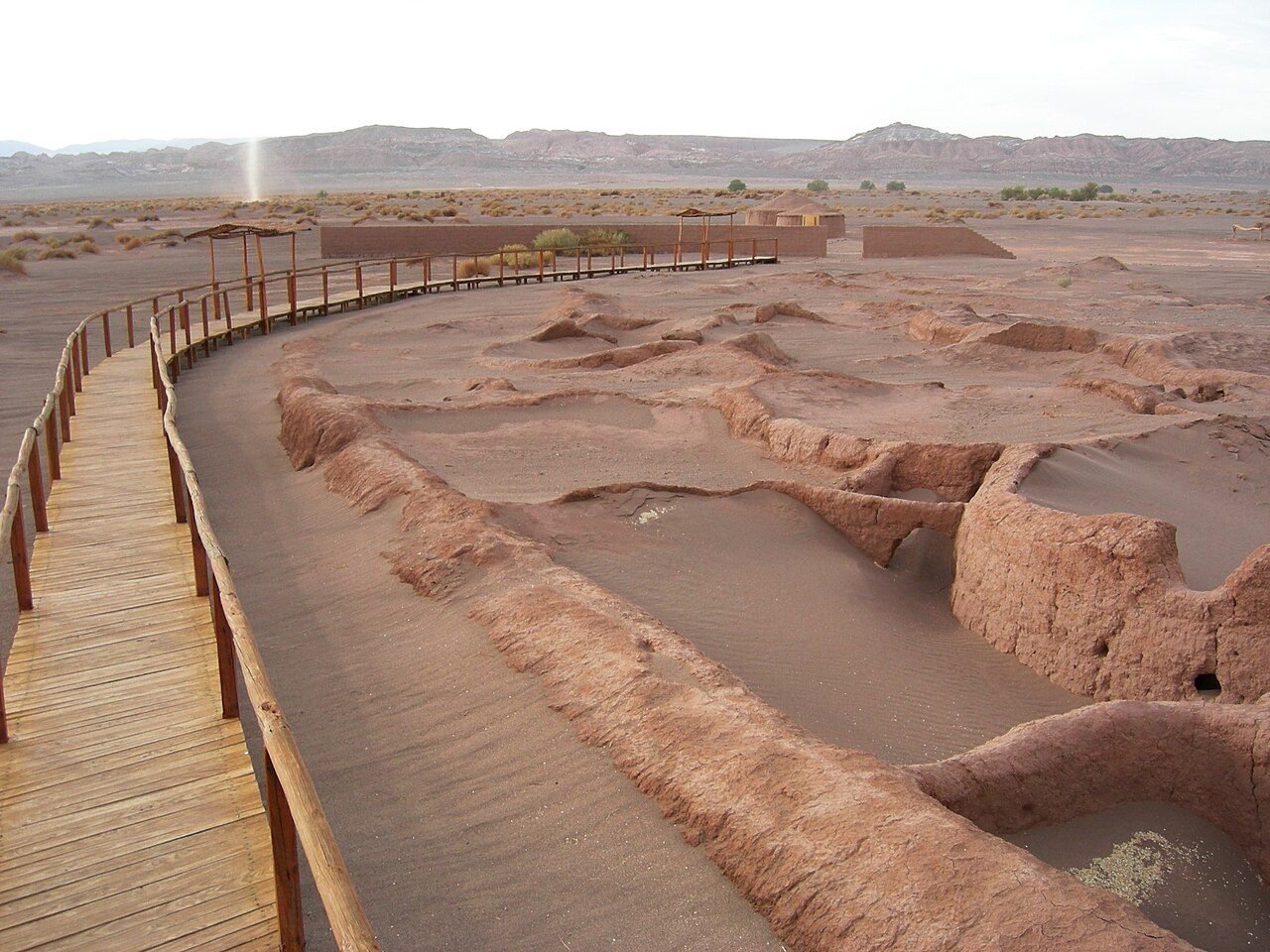
Southwest of San Pedro the oasis fades into a plain of sand and scrub. Dunes drift across the ground, and the wind smooths everything into gentle curves. Among them, partly uncovered, lie the walls of an ancient village: dozens of round rooms joined together like cells in a honeycomb, built of mud and half buried in sand. This is Tulor, one of the oldest known villages in the region.
The site is small and quiet, and at first sight it may seem modest. Give it time, and it tells a remarkable story about how people first settled and farmed this desert.
An early village in the sand
Tulor was lived in for a long period, usually dated from around 800 BC to about AD 500. Its people belonged to what archaeologists call the Formative period, when communities in this part of the Andes moved from a life of hunting and gathering towards farming, herding and permanent homes.
The houses were round, built from thick walls of mud, and they were joined to each other so that the whole village formed one connected structure. Small doorways led from room to room. Some rooms seem to have been for living and sleeping, others for storage or work. The plan suggests close family groups sharing walls and spaces, much as some communities in the area still share land and water today.
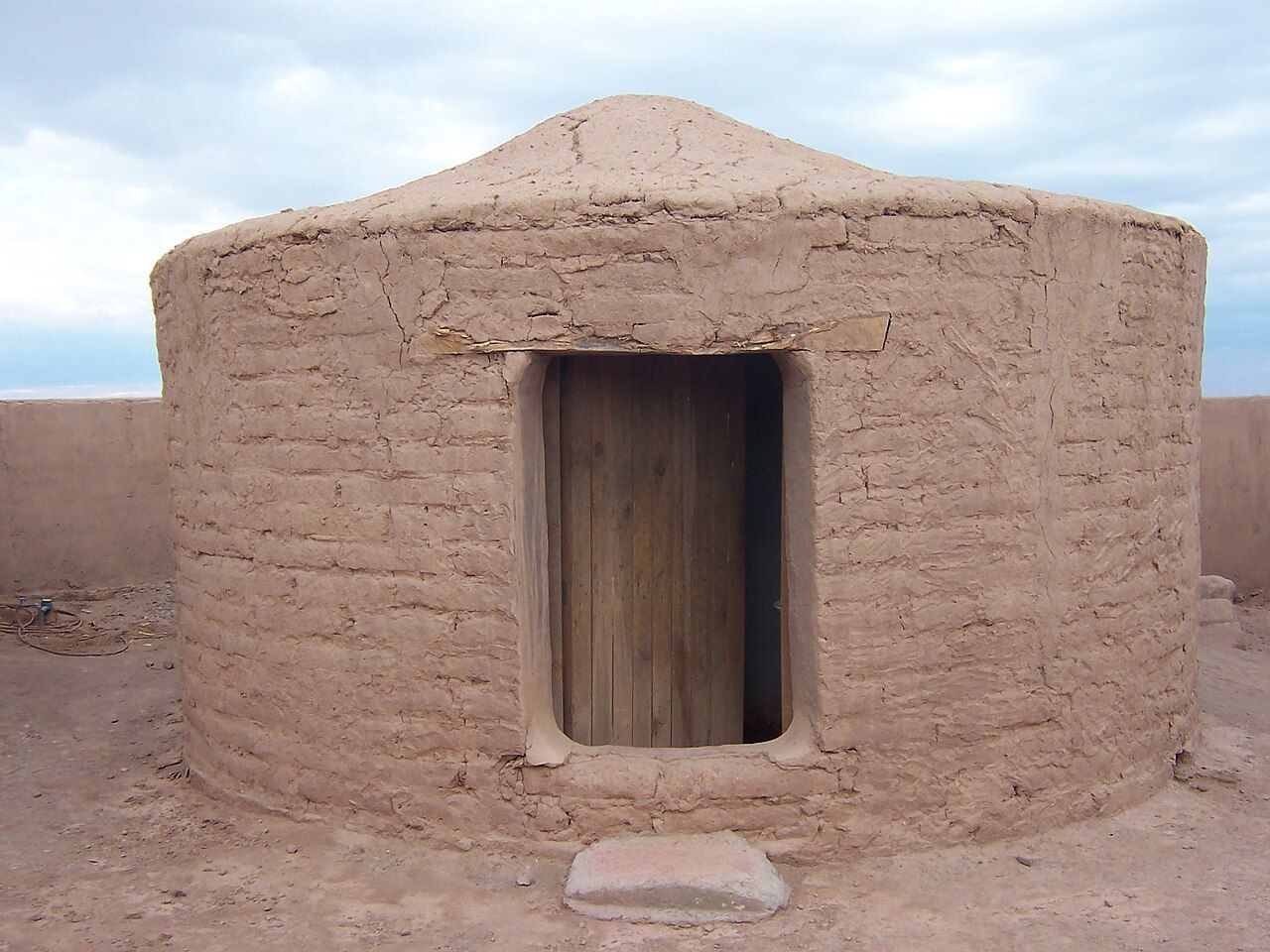
Over time the village was abandoned, perhaps as the river that fed it shifted or dried and the sand advanced. The dunes then covered the walls, which helped protect them from wind and sun for many centuries. Excavations in the second half of the twentieth century uncovered part of the village, and a few houses were rebuilt nearby to show how they once looked.
How people lived by the oasis
Life at Tulor depended on water. The river from the mountains created a strip of green in the desert, and the villagers farmed small fields of maize, quinoa and other crops along it. They gathered the pods of algarrobo, a desert tree whose sweet pods can be ground into flour, and the fruit of the chañar, a thorny shrub with edible berries.
They also kept llamas, which gave wool, meat and transport. With llamas, goods could move between the oases, the high plateau and the coast. Tulor was part of that wider world: its people made pottery and textiles, and trade brought in materials from far away.
Many traces of this life, including pottery and tools found at the site, help archaeologists piece together daily routines: cooking in the rooms, storing food in pits, working fibres and clay. Little of it is visible to the casual eye, but knowing it changes how you look at the walls.
Look up next: The Lickanantay people and the land
Walking the site
A raised wooden walkway curves above the excavated area, letting you look down into the rooms without stepping on them. From it you can follow the layout of the village and see how the round walls connect. At the end, the reconstructed houses give you a sense of scale: their low doorways, thick walls and cool, dim interiors.
The site is managed by the local Coyo community, which charges an entry fee and looks after visitors. Ask at the entrance about any guided explanation they offer. Opening times and charges are set by the local community.
Respect for the site
The mud walls are fragile. Exposed to wind, sun and the occasional rain, they wear away easily, and footprints or hands do lasting harm. For the communities of the oasis, Tulor is also part of their own heritage, a place of ancestors as much as of archaeology.
- Stay on the walkway and the marked paths at all times.
- Never step down into the rooms or onto the walls.
- Do not touch the walls or take pottery fragments, stones or sand.
- Keep voices low and treat the place with the same care you would give a cemetery.
The same rules apply at the hill fortress of Quitor and at rock art sites such as Hierbas Buenas. Each of these places is irreplaceable, and once damaged, it stays damaged.
Morning light on the walls
Morning is usually the best time. The light is clear, the wind has not yet risen, and the sand is cooler underfoot. By afternoon, wind often lifts sand across the plain, which stings exposed skin and gets into cameras. A light scarf or buff over your face helps on gusty days.
There is almost no shade at the site, and the sun is strong at this altitude all year. Wear a hat and sunglasses, and carry water. Winter mornings can be cold, so dress in layers you can take off as the day warms.
By bike through Coyo
Tulor lies roughly ten kilometres southwest of town, reached by a dirt road through the ayllu of Coyo. Many people cycle there along the flat road, which takes around an hour each way at a gentle pace. Others drive or go by taxi. The road is dusty and has little traffic, so carry water and a repair kit if you ride.
Because it is close to town and not very high, Tulor makes a good outing in your first days, while your body is still adapting. Combine it with a morning at the adobe town of San Pedro, or keep the afternoon for the salt lagoons further south. Seeing the old village first helps you understand everything else in the region, from the irrigation channels around town to the way communities still organise their land.