
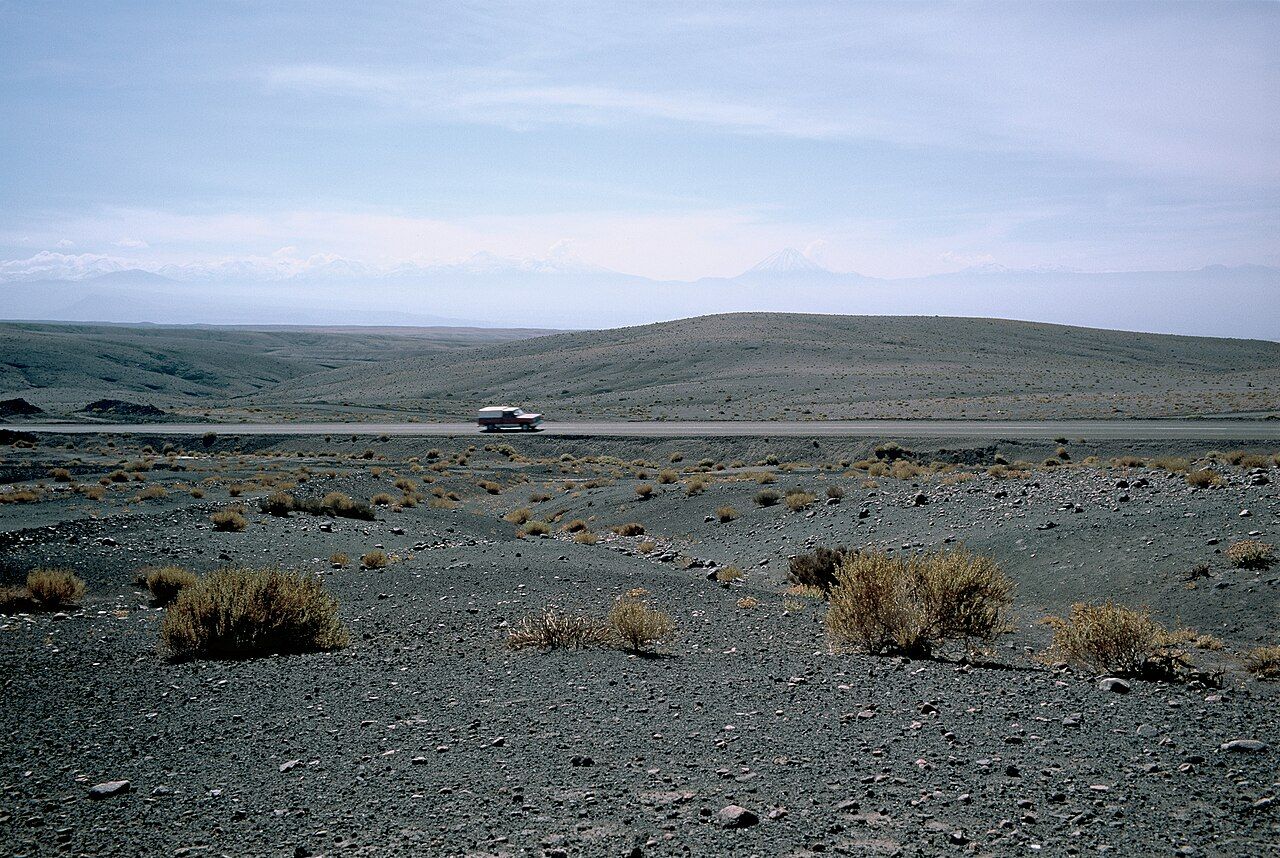
San Pedro de Atacama is remote, but not hard to reach. Most visitors arrive through Calama, a city about a hundred kilometres to the northwest, and finish the journey by road. Others come by long-distance bus from elsewhere in Chile, or overland from Argentina or Bolivia. Each route ends with the same feeling: a slow descent into a green oasis surrounded by desert, with volcanoes standing over it.
Flying to Calama
The nearest airport is at Calama, which has regular domestic flights from Santiago and sometimes from other Chilean cities. The flight from Santiago takes around two hours, and on a clear day the view as you approach is a good introduction to the desert: bare ranges, dry riverbeds, and huge open-pit mines.
Calama itself is a mining city, busy and practical, and few visitors stay. It sits at roughly 2,300 metres, close to the altitude of San Pedro, so you begin adjusting as soon as you step off the plane.
From the airport, shared and private transfers run to San Pedro, usually arranged in advance or at desks in the arrivals hall. Taxis and hire cars are also available.
The road across the desert
The road from Calama to San Pedro is paved and in good condition. It runs east and then southeast across a wide plain of gravel and rock, with almost no settlements along the way. The drive usually takes around an hour and a half.
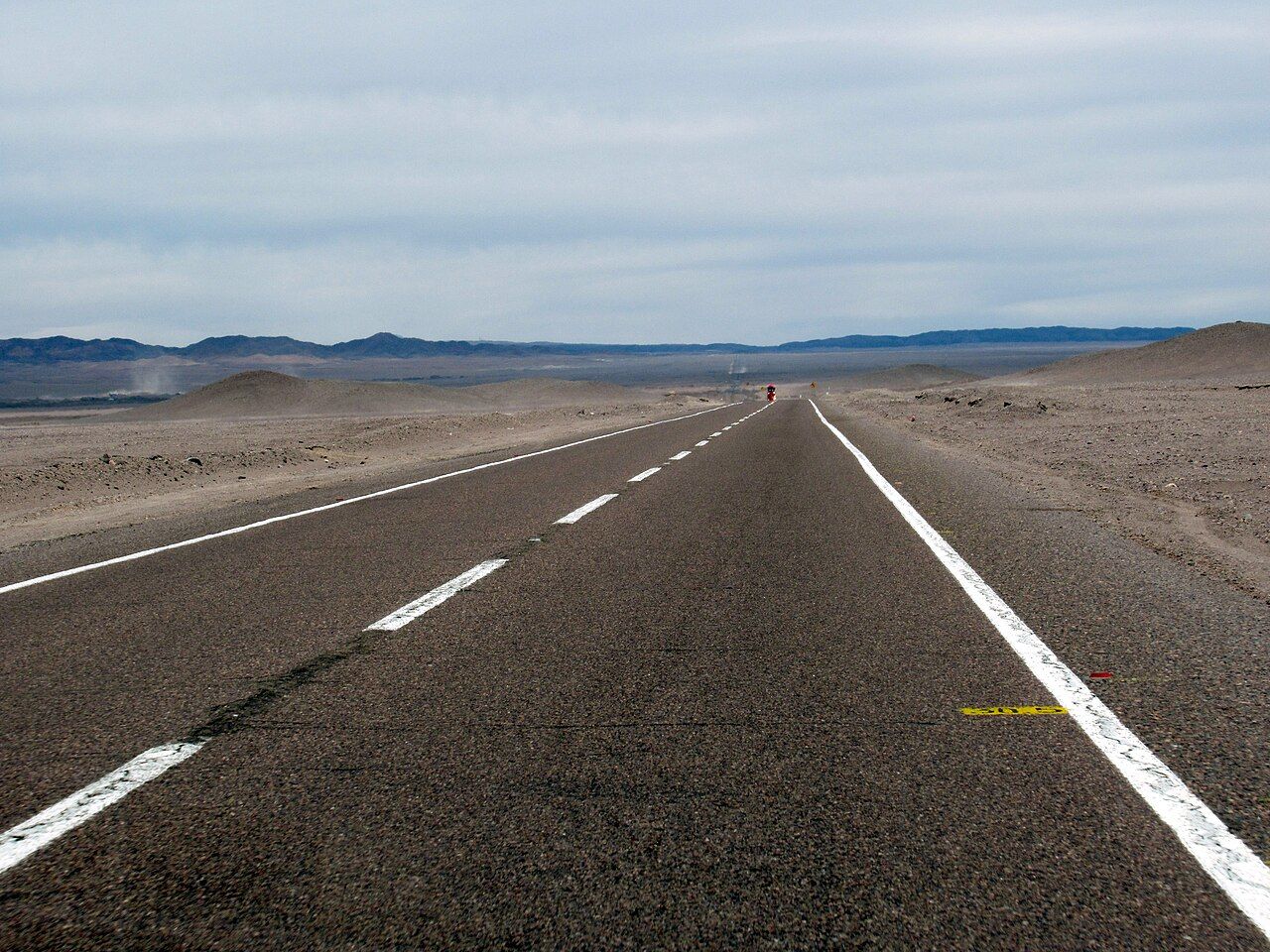
Partway along, the road climbs over higher ground and then drops towards the San Pedro basin. As you come over the last rise, the view opens: the Cordillera de la Sal below, the salt flat stretching south, and the cone of Licancabur, the volcano over town, standing against the sky. Many people remember this moment as the real start of their trip.
If you drive yourself, take care. Heavy mining trucks use roads around Calama, distances are long and fuel stations are few. Fill the tank before leaving, carry water, and avoid driving tired. Wind and dust can reduce visibility, and wandering animals are a hazard near settlements.
Look up next: Altitude, dry air and your body
Long-distance buses
Buses connect San Pedro with Calama several times a day and with other cities in northern Chile, such as Antofagasta and Arica. Long-distance services also link it with Santiago, though the journey takes the best part of a day or more. Overnight buses with reclining seats make the long trips easier.
Bus services and timetables change with the season, and some routes run only on certain days. Book ahead in busy periods.
In San Pedro, buses arrive and leave from a terminal on the edge of town, within walking distance of the centre for those with light luggage. Arriving after dark, keep a torch handy, since the lanes between the terminal and the centre are dim and uneven.
Crossing from Argentina or Bolivia
San Pedro is close to two international borders, and many travellers arrive overland.
- From Argentina, a paved road crosses the Andes over the Paso de Jama, linking the northwest of Argentina with San Pedro. The pass is very high, and the road climbs well above four thousand metres.
- From Bolivia, many people arrive on multi-day trips across the high plateau from the Salar de Uyuni, crossing at the Hito Cajón border post near Licancabur and descending steeply to San Pedro.
Both crossings are at great altitude and can close in winter storms or bad weather. Chile's customs checks are strict about food, plants and animal products.
Arriving at altitude
However you arrive, you will be at about 2,400 metres. Take it easy on your first day. Drink plenty of water, eat light meals and avoid alcohol. If you came from the coast or from sea level, give yourself a day or two before heading to higher places such as the El Tatio geysers.
The dry air and strong sun take some getting used to as well. Keep sunglasses, sunscreen and a refillable water bottle in your hand luggage so you have them as soon as you land.
A small centre on foot
San Pedro's centre is small and easy to explore on foot. Many nearby sites, such as the old fortress of Quitor and the village of Tulor, are within reach by bicycle. For longer trips, most people use organised transport or a hire car.
If you hire a car, check the condition of tyres and the spare, and ask about which roads are paved and which are gravel. Some routes to the high lagoons and geysers have rough sections, and conditions change with the weather.
The Calama road in daylight
Try to arrive in daylight, especially if you plan to drive. The road from Calama is easy in good light but unlit at night, and the desert after dark is very empty. A daytime arrival also gives you the view of the oasis and the volcanoes as you descend.
Think about timing too. If you want to see the stars at their best, read about moon phases and the best nights and plan your dates around the new moon. Arrive a little before it, settle in, and you will be ready to enjoy the darkest skies of your stay. The last stretch drops gently towards the oasis, with Licancabur standing straight ahead and the dark line of trees that marks San Pedro growing slowly larger as you come down.