
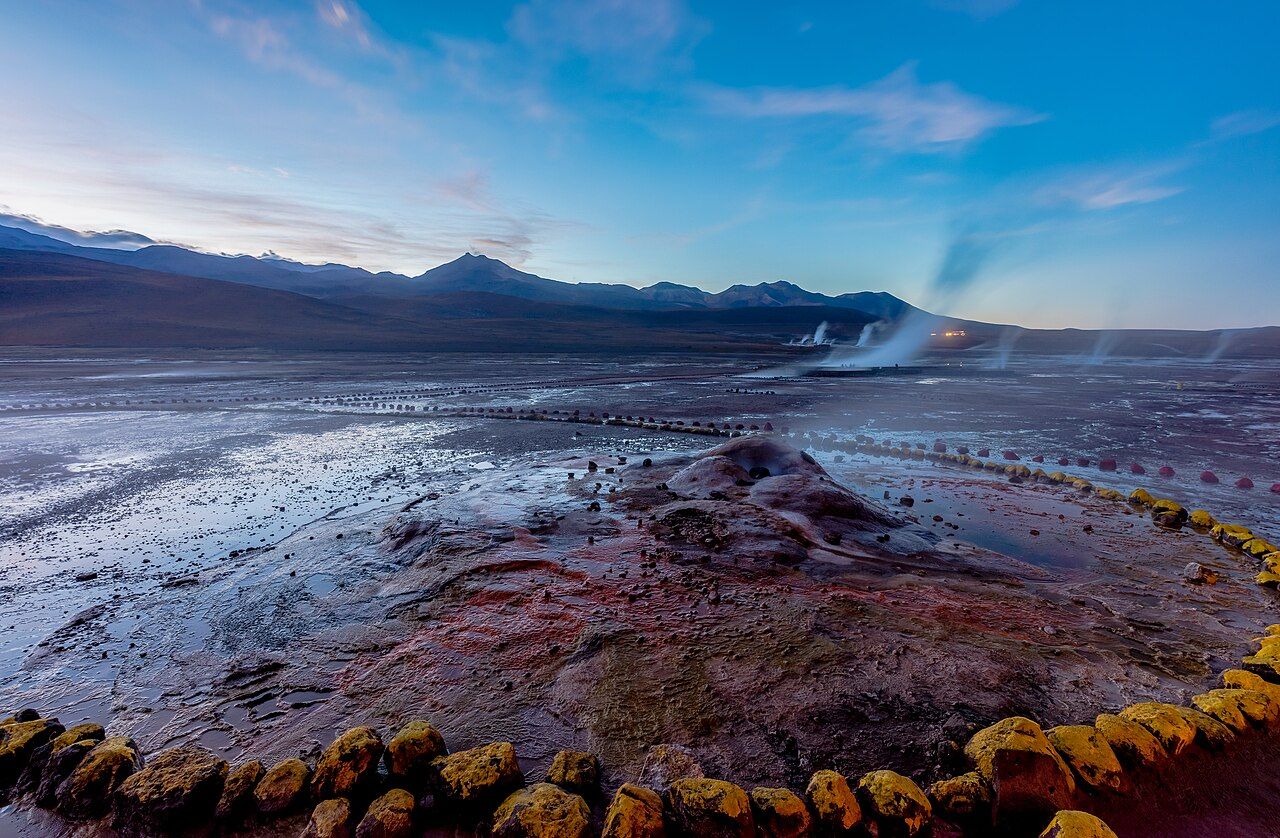
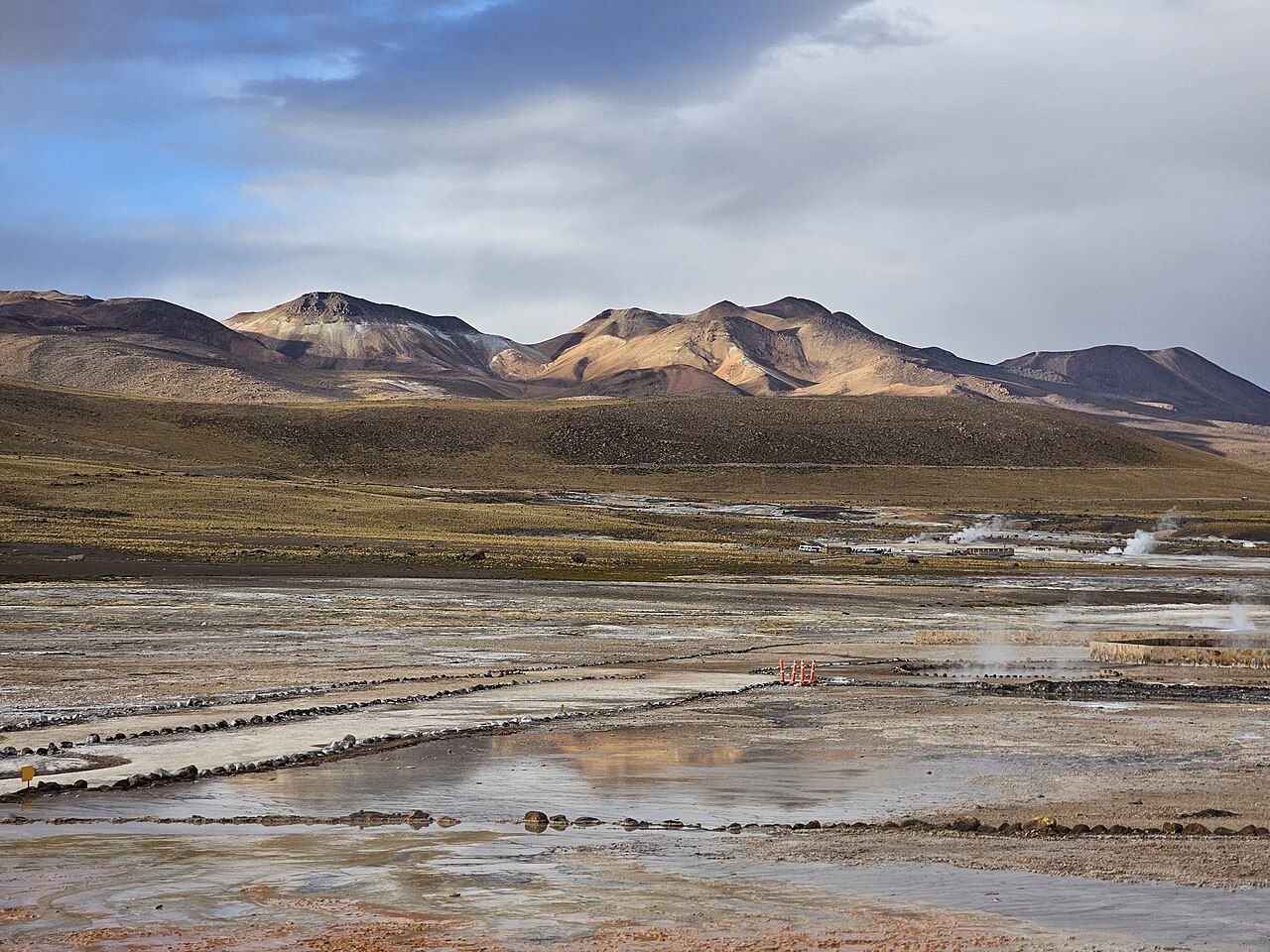
El Tatio lies on a high basin ringed by volcanoes, at about 4,300 metres above sea level. Underground, water meets heat from the volcanic rocks below and forces its way to the surface through vents, pools and cones. The result is one of the largest geyser fields in the world, with dozens of active geysers spread across a wide plain. The name is often said to come from a word for an old man or grandfather, linked to the way the field seems to breathe.
At dawn, the field is at its most dramatic. The air is far below freezing, and the hot water vapour condenses into thick white columns that rise straight up in still air. As the sun climbs and warms the ground and air, the steam thins and becomes harder to see. That is why nearly everyone arrives before sunrise.
The pre-dawn start
El Tatio sits about 90 kilometres north of San Pedro de Atacama, along a gravel road that climbs steadily from the oasis into the high Andes. The drive usually takes around two hours, and to reach the field before sunrise you need to leave in the small hours. Expect to be up long before dawn, half asleep in a cold car with the stars wheeling overhead.
Driving the road yourself in the dark is a serious undertaking. The surface is rough in places, there are no services along the way, and at this altitude both cars and drivers struggle. If you choose to go independently, drive it first in daylight if you can, and carry spare fuel, warm clothes and water. In the summer storm season, from about December to March, snow and mud can close the road; read moon phases and the best nights for more on that season.
Steam columns and boiling pools
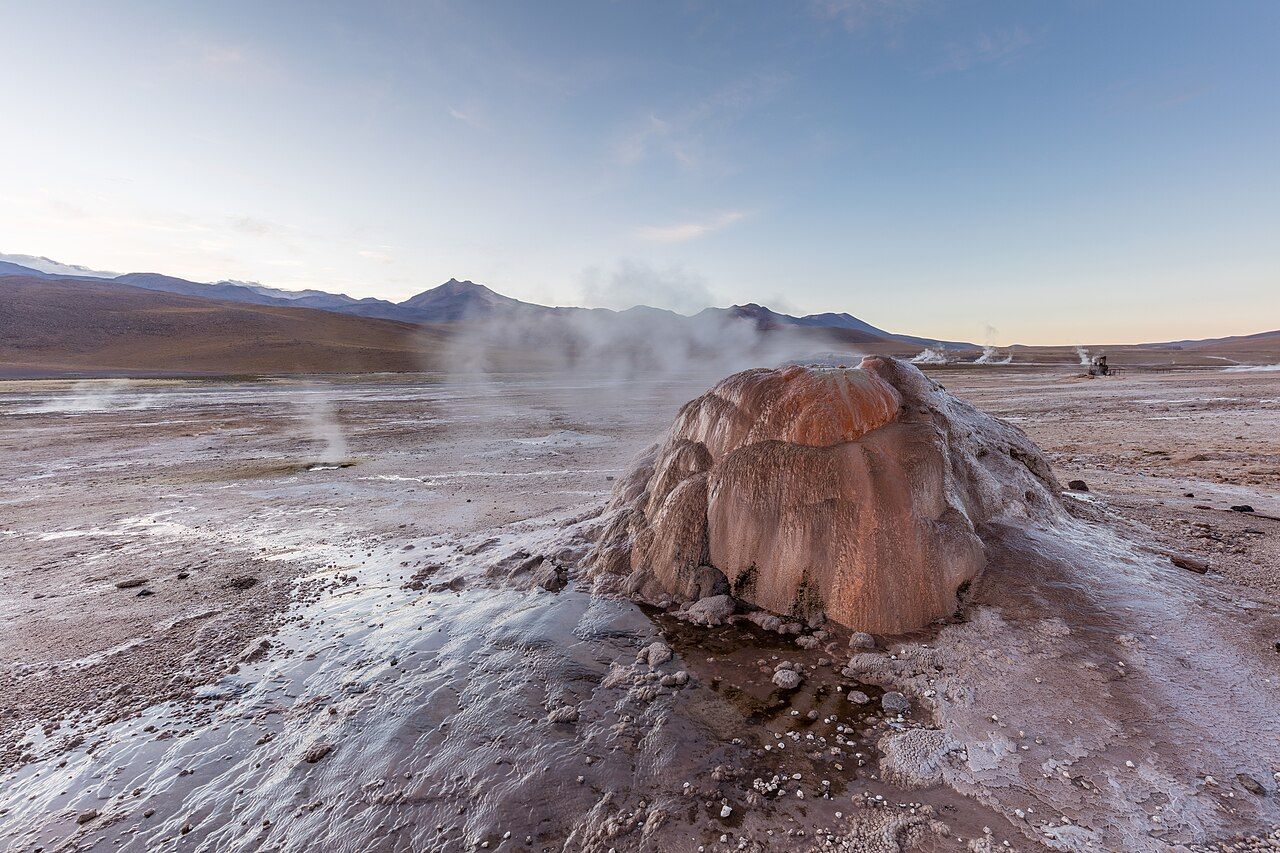
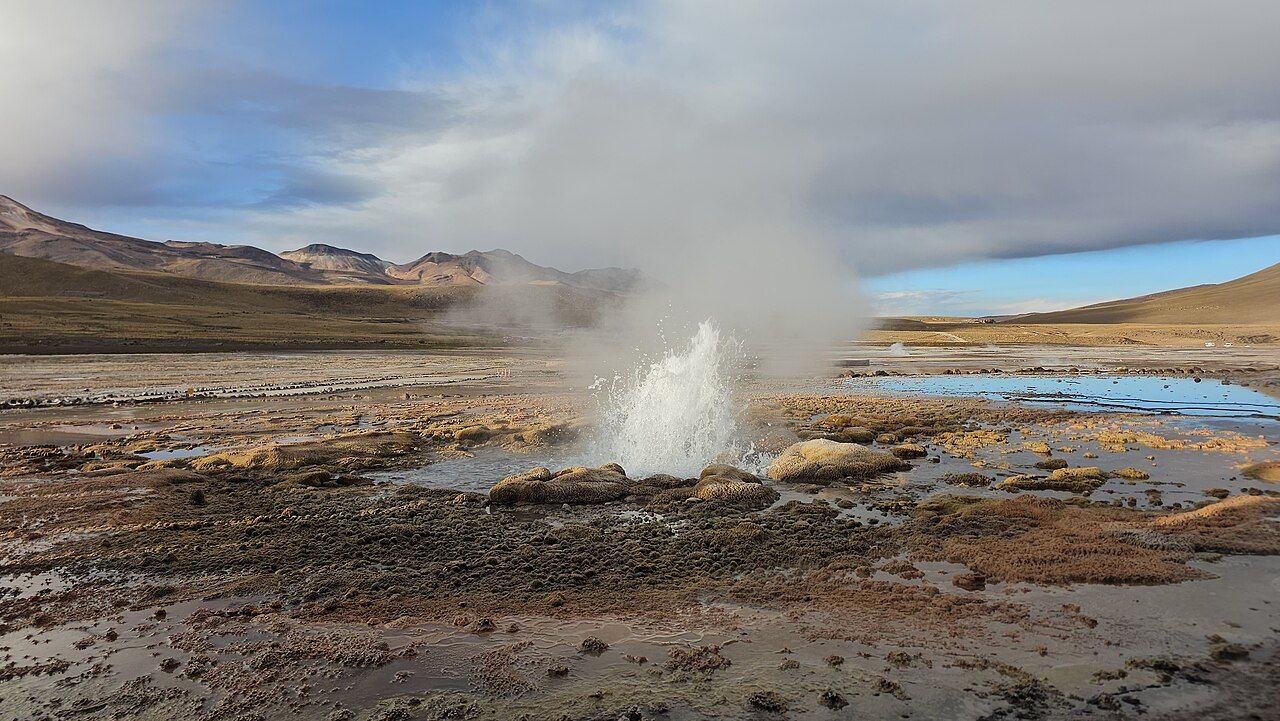
When you arrive, the field looks like a vast steaming kitchen. Columns of white vapour rise from dozens of spots, some tall and steady, others puffing in short bursts. Most geysers at El Tatio do not shoot water very high; their charm lies in the sheer number of vents and the play of steam against the volcanoes as the light grows.
Look closer and you find boiling pools of clear water, small cones of mineral deposits and crusts tinted orange, yellow and green by minerals and heat-loving microbes. Water boils at a lower temperature here than at sea level because of the thin air, but it is still more than hot enough to cause severe burns.
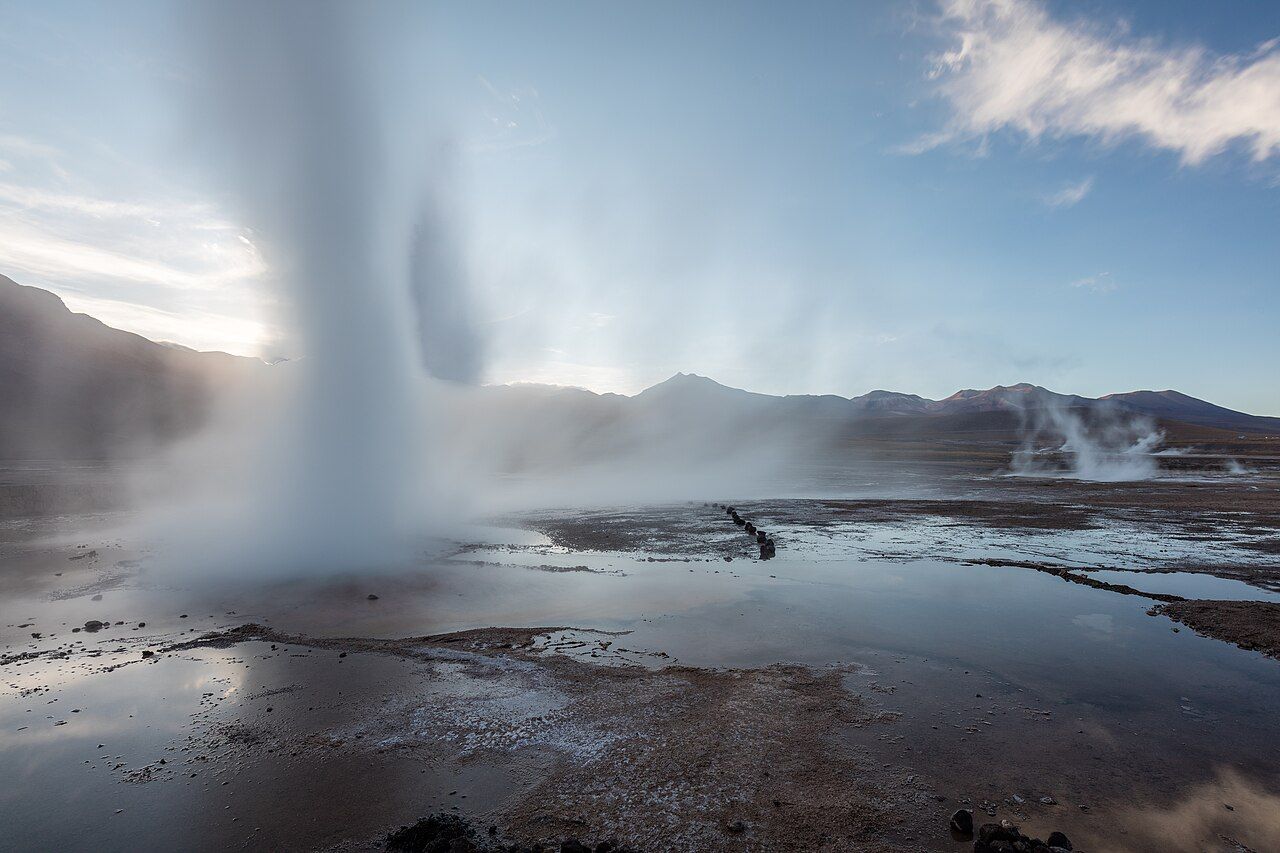
At dawn, the field is at its most dramatic.
As the sun touches the plain, the scene changes again. Frost on the ground melts, the steam thins, and birds and grazing animals start to move on the surrounding slopes. Stay for an hour after sunrise if you can; the change from blue cold to warm light is part of the experience.
Look up next: Blue water under the volcanoes
Cold, burns and boardwalks
Dawn temperatures at El Tatio regularly fall well below freezing, especially in winter. Wind can make it feel even colder. Dress in layers as if for a winter mountain day: thermal base, fleece, insulated jacket, hat, gloves and warm socks. Your feet will be on frozen ground for an hour or more.
The most serious danger is not the cold but the ground. The crust around vents and pools can be thin, and boiling water lies just beneath it. Visitors have been badly burned, and some have died, after stepping off safe ground or falling into pools. Follow these rules without exception:
- Stay on marked paths and boardwalks, and behind any lines of stones or barriers.
- Never step onto crusted ground or lean over pools for a photo.
- Keep children close and in sight at all times.
- Do not throw anything into the vents or pools.
- Follow instructions from staff and rangers.
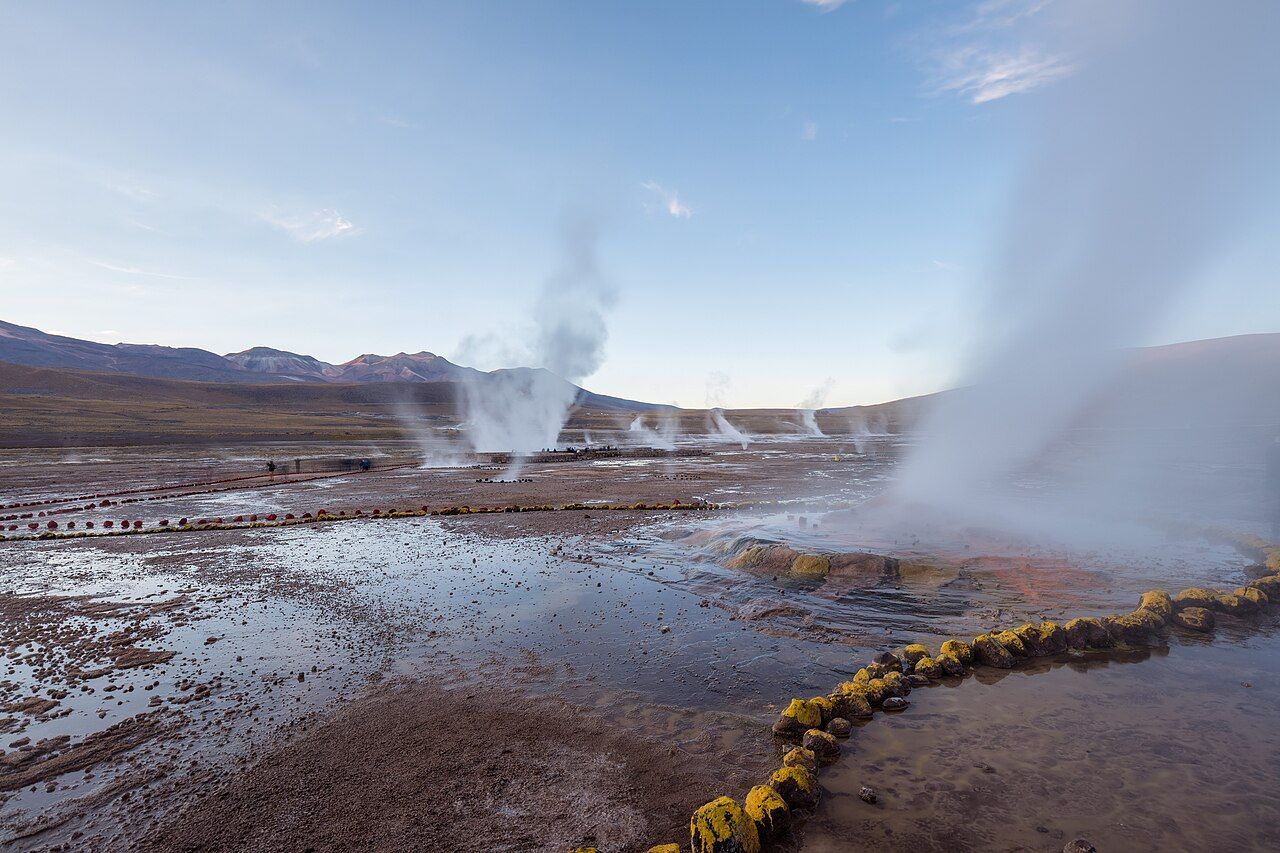
The field is managed by local Lickanantay communities, who control access, set the rules and charge an entry fee. Respect any closed areas.
Altitude at 4,300 metres
El Tatio is much higher than San Pedro, and many visitors feel the change. Headache, nausea, dizziness and shortness of breath are common at this height, especially for people who have just arrived. The pre-dawn start and lack of sleep make it worse. Severe altitude sickness can be dangerous.
Spend at least a few days in San Pedro before going up, drink water, eat lightly and avoid alcohol the night before. Move slowly at the field, and if you feel unwell, tell someone and head back down. People with heart or lung conditions, high blood pressure, or who are pregnant, should talk to a doctor before planning a trip to this altitude. The guide to altitude, dry air and your body has more detail.
Bathing and the way back
A thermal pool near the field has often been open for bathing, letting brave visitors soak in warm water while the air around them stays freezing. Whether bathing is allowed, and where, depends on current rules. Changing out of warm clothes at this height is a shock, so dry off quickly and dress again fast.
On the drive back, the road passes wetlands and high grassland where you may see vicuñas, the wild relatives of llamas, along with birds feeding in the streams. Small villages along the way have adobe houses and churches. Slow down for animals on the road, and stop only where it is safe to pull over.
By mid-morning you are back in the oasis, often with a headache, cold toes and a camera full of steam. Many people sleep in the afternoon. If you plan to stargaze the same night, take a long rest first; your eyes, and your body, will thank you.
Combining El Tatio with the night sky
The early start means that, on clear nights, you see the stars on the drive up, high above the altiplano, the high Andean plateau. If you are a passenger, look out at the Milky Way and the Magellanic Clouds as the road climbs. When the first light appears, the stars fade one by one behind the steam. Pair the trip with a reading of why the Atacama sky is so clear to understand why the air here is so clean and sharp at dawn. As the sun climbs, the columns of steam thin out and the field turns quiet again, with only a few pools still bubbling beside the boardwalk.