
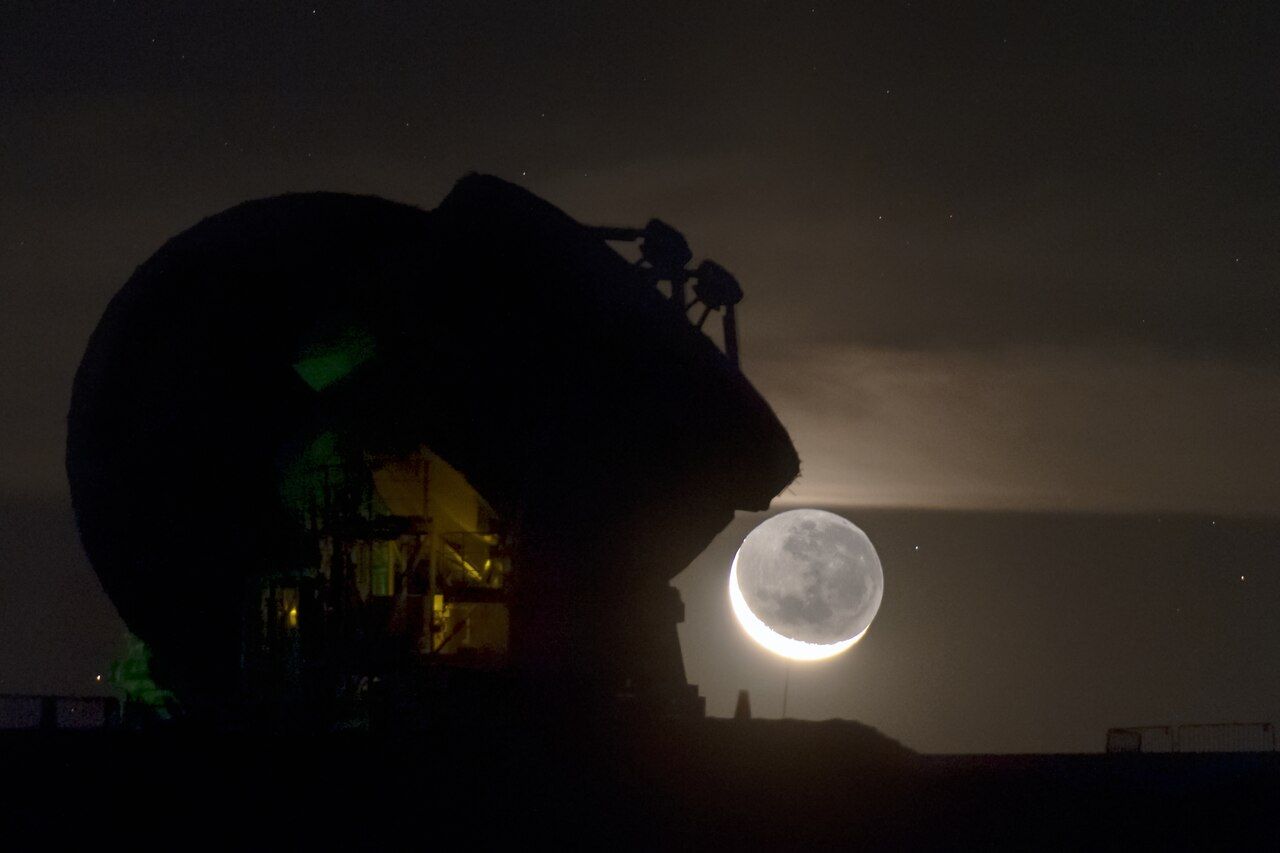
Most visitors plan a trip to the Atacama around flights and days off, then hope the sky cooperates. The sky here usually does. What it cannot change is the Moon. A bright Moon floods the air with scattered light and hides the faintest stars, the Magellanic Clouds and the dark lanes of the Milky Way. A little planning around the lunar cycle makes the difference between a pretty sky and an overwhelming one.
Why new moon matters
The Moon goes through its phases in about 29.5 days. At new moon it sits close to the Sun in the sky, rises and sets with it and stays out of the way all night. In the days around new moon, the night is as dark as nature allows.
At full moon the picture is reversed. The Moon rises around sunset, stays up all night and lights the desert so brightly you can walk without a torch. That has its own beauty: valleys turn silver and volcano outlines stand sharp against a deep blue sky. But faint objects vanish, and the Milky Way shrinks to a pale ghost or disappears.
As a rough guide, the darkest window runs from a few days before new moon to a few days after it. A thin crescent near the horizon after sunset does little harm and makes a fine sight in its own right, as it sets soon after the Sun.
How the Moon moves through the week
The Moon rises about fifty minutes later each day on average, although the exact gap varies. This simple fact helps you plan:
- Waxing crescent: visible in the west after sunset, then sets early. Dark sky for most of the night.
- First quarter: high in the evening, sets around midnight. The late night is dark.
- Full moon: up all night. Better for moonlit walks and landscapes than for faint stars.
- Last quarter: rises around midnight. The evening is dark, the small hours bright.
- Waning crescent: rises in the hours before dawn. Nearly the whole night stays dark.
Any printed or online moon calendar shows the dates. Check the rise and set times for northern Chile rather than for home, since they shift with location.
Seasons and the length of the night
San Pedro lies just inside the tropics, so day length changes less than in Europe or North America, but the difference still shows. Winter nights, from about May to August, are longer and give more hours of darkness. They also bring the brightest part of the Milky Way high overhead, which is why many keen observers prefer this season.
The cost is cold. Winter nights in town often drop below freezing, and higher ground is colder still, especially with wind. Summer nights, from about December to February, are milder and more comfortable for a long session, though shorter.
Look up next: A sky turned the other way up
Spring and autumn sit in between. They often bring calm, clear nights without the deepest cold, and they can be a good compromise for a first visit. For gear, see the guide to desert heat and desert cold, which covers layers for a night outdoors.
Summer storms in the high Andes
From about December to March, moist air spills over the Andes from the east and builds afternoon storms over the high ground. Locally this is called the invierno altiplánico, the altiplanic winter, even though it falls in the southern summer. Storms bring thunder, hail and sometimes snow to the high passes, and occasional rain or cloud even reaches the desert floor around San Pedro.
Many evenings still clear, but cloud can linger, and some high roads may close after heavy weather. If your trip falls in this season, give yourself several nights rather than staking everything on one, and stay flexible about which trips you take on which days. Snow and ice can close the roads to high places such as the El Tatio geysers or the lagoons.
Nights around the new Moon
A simple approach works for most trips:
- Look up the date of new moon nearest your stay.
- Keep the darkest nights for stargazing, and the brighter ones for sunsets, moonlit walks or early nights before dawn trips.
- If the Moon is up in the evening, rest first and go out after it sets.
- Leave at least one spare night in case of cloud or tiredness from altitude.
Bright nights are not wasted. The full Moon over a volcano, or a thin crescent beside an observatory dish, can be one of the finest sights of the trip. They simply call for a different kind of looking, and they make good subjects if you want to try photographing the night.
Other things that steal the dark
The Moon is not the only source of unwanted light. Car headlights, phone screens and white head torches all reset your eyes, and it takes twenty minutes or more to recover. Agree with anyone you go out with to use only dim red lights. Dust raised by wind can also soften the sky near the horizon on some nights, while high thin cloud can turn bright stars into fuzzy halos.
When all of these line up in your favour, the result is a sky that feels almost crowded. A moonless winter night, still air and a spot well away from the road give you the Atacama at its best. Even if your dates are fixed, knowing the phase of the Moon tells you which hours to stay up for.