
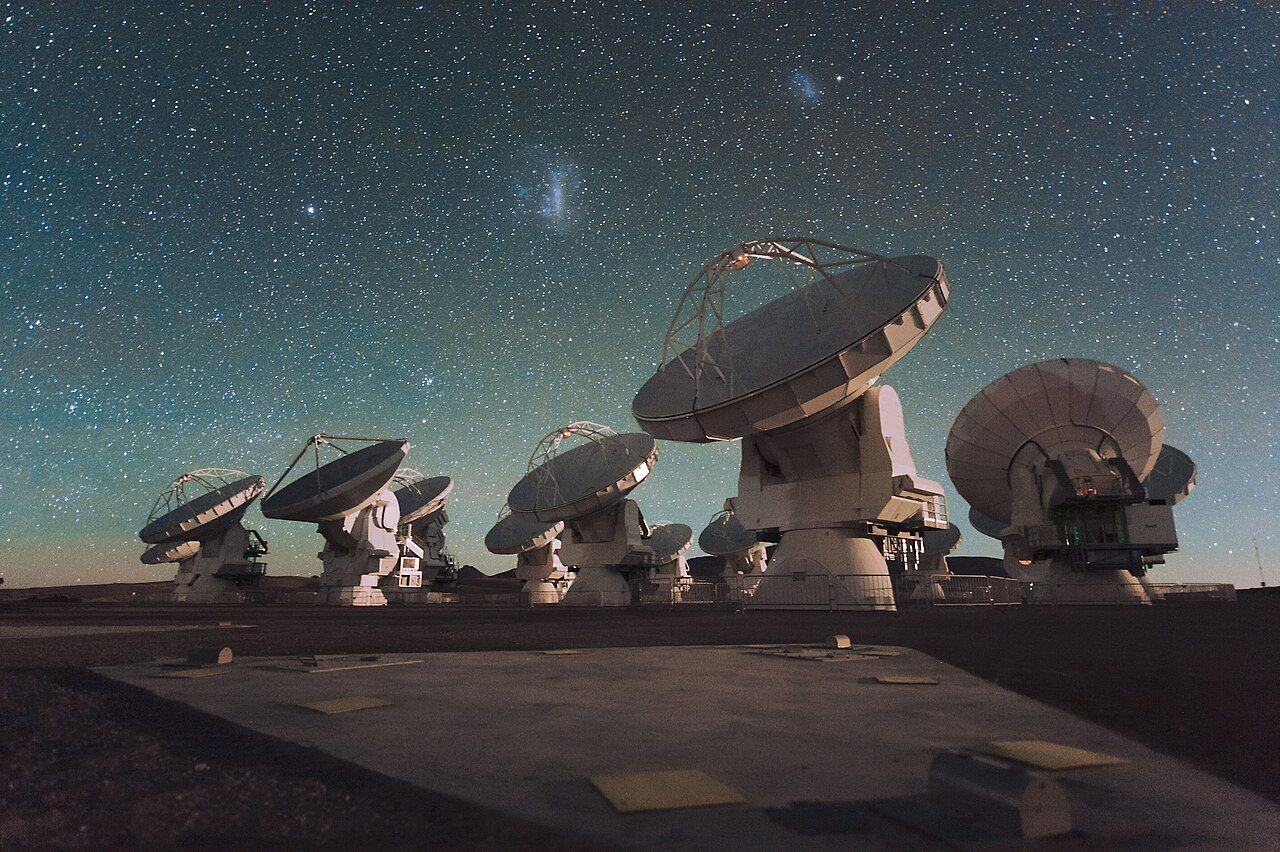
Northern Chile hosts a large share of the world's biggest research telescopes. Most sit far from towns on high peaks and plateaus, reached by private roads with guarded gates. They are working scientific sites, not attractions. Still, some offer public visits on set days, and knowing what they do adds a layer of meaning to every clear night you spend in the desert.
ALMA on the Chajnantor plateau
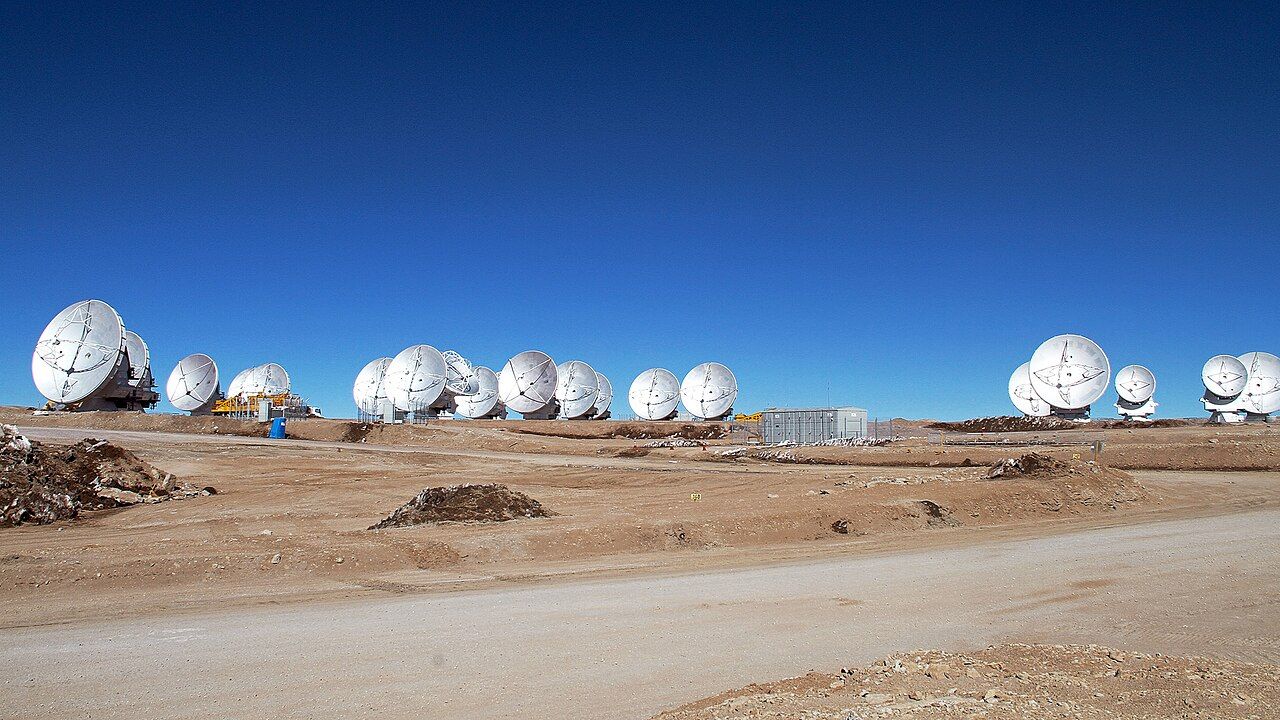
East of San Pedro, at about 5,000 metres above sea level, the Chajnantor plateau holds the Atacama Large Millimeter/submillimeter Array, known as ALMA. It is an international project with partners from Europe, North America and East Asia, working in cooperation with Chile. The array has 66 antennas, most of them 12 metres across, with a smaller group of 7-metre dishes.
The antennas work together as one huge instrument. Special transporters carry them across the plateau, so the spacing between dishes can change from a few hundred metres to many kilometres. Spreading them out sharpens the detail the array can see, much as a larger lens would.
Why build so high
ALMA does not collect visible light. It picks up millimetre and submillimetre waves, which come from cold gas and dust in space: the clouds where stars are born, the discs where planets form and distant galaxies seen as they were long ago. Water vapour in the air absorbs these waves strongly. The higher and drier the site, the less water stands between the antennas and the sky.
At 5,000 metres on the edge of one of the driest deserts on Earth, Chajnantor has very little water vapour above it, which is why the array was built here despite the hardship. The story on why the Atacama sky is so clear explains the climate behind that dryness. Work at these wavelengths can also go on by day, since sunlight matters far less to them than to optical telescopes.
People working on the plateau face serious altitude. Most staff work at a lower support base at about 2,900 metres, where the array is controlled, and go up to the high site only when needed, often with extra oxygen and health checks.
Look up next: Desert heat, desert cold
Public visits in general
ALMA has offered free public visits to its lower support base on some weekend days, with places limited and registration required well in advance. Visits there show the control room and maintenance areas, and sometimes an antenna being serviced. The high plateau itself is not open to casual visitors.
Other large observatories in northern Chile run similar programmes. Paranal, near the coast south of Antofagasta and far from San Pedro, has welcomed registered visitors on certain weekend days. Its group of large optical telescopes sits on a mountain at about 2,600 metres. Whatever you plan, register through the observatory's own channels, bring the identity document you registered with and arrive on time; gates close, and missed slots are rarely made up.
- Register ahead; visits fill up quickly.
- Bring the identity document used to register.
- Dress warmly, even at the lower bases.
- Expect long drives on desert roads.
Altitude is serious
Even the support base at around 2,900 metres is higher than San Pedro, and the plateau sits far above anything most visitors have experienced. Headaches, breathlessness, poor sleep and nausea are common signs of altitude sickness, and severe cases can be dangerous. Spend a few days in San Pedro first, drink water, avoid alcohol on the days you go higher and come down if you feel unwell. If you have heart or lung conditions, or are pregnant, talk to a doctor before any high trip. The guide to altitude, dry air and your body covers the basics.
Seeing observatories from outside
Many visitors only see the observatories from a distance: a white dome on a far ridge, or a glint of dishes on a plateau. That distance is part of their nature. Observatory roads are private, and casual visits to gates are not welcome. Never drive up access roads at night, never shine lights towards the sites and never fly drones nearby.
Instead, enjoy what they point at. On a dark night outside San Pedro you see the same Magellanic Clouds and Milky Way the big instruments study, only without the detail. The story on the southern sky for northern eyes is a good companion for a night under them.
What the observatories mean for the region
The arrival of large research projects has brought jobs, roads and scientific links to northern Chile, along with debates about land, water and who benefits. The plateaus and peaks hold meaning for local Lickanantay communities, and the relationship between the observatories, those communities and the state is an ongoing part of local life. Some high places carry names and stories much older than any telescope, and several peaks around San Pedro are treated with deep respect. As a visitor, you see only the edges of that story, but it is worth keeping in mind when you look at a row of white dishes on a mountain that people have watched the sky from for thousands of years.
The simplest way to connect with that long history is to step outside on a dark night, let your eyes adjust and look up. The instruments see further, but the sky above San Pedro belongs to anyone who takes the time to look. On a clear afternoon the white dishes catch the sun from far across the plateau.