
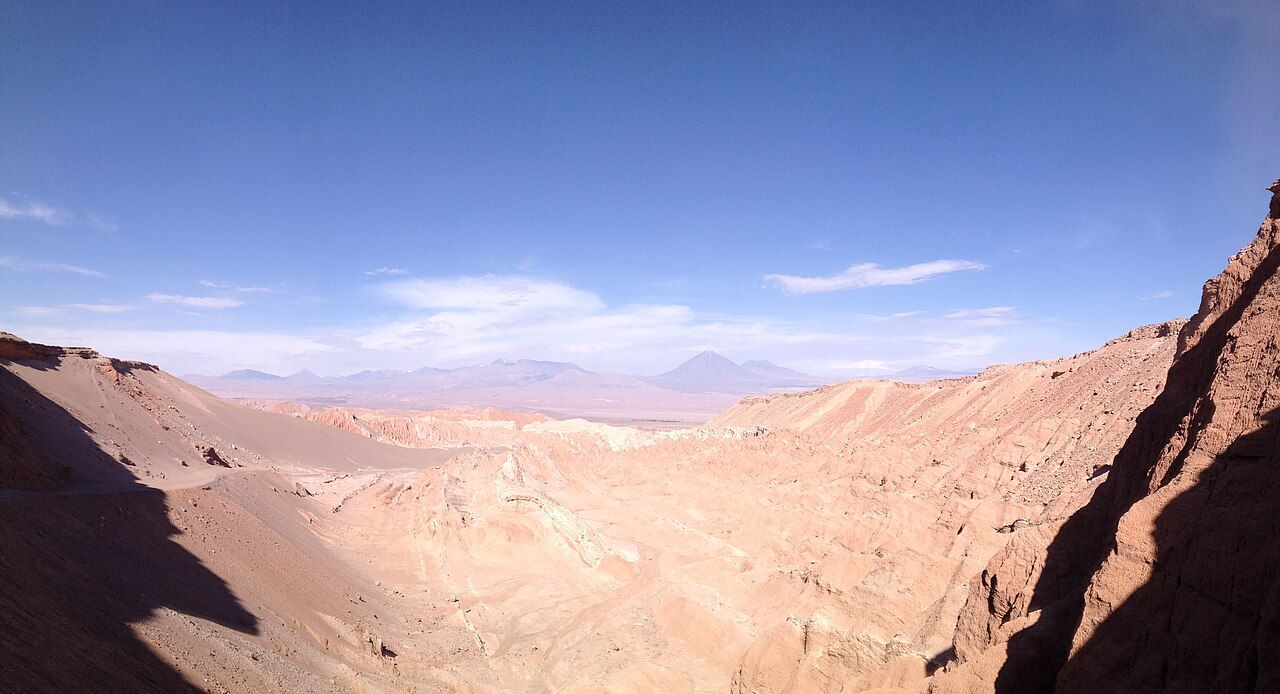
Valle de la Muerte, the Valley of Death, lies close to San Pedro de Atacama in the same range of salt hills as Valle de la Luna. The name sounds dramatic, but the place is more beautiful than grim. Red and brown walls of rock rise above a sandy floor, and a long, steep sand slope pours down from one side of the valley. From the ridge above it, the view stretches across the oasis to the line of volcanoes on the Bolivian border.
A popular story says the valley was first called Valle de Marte, Valley of Mars, and that the name changed through a mishearing. Whether or not that is true, both names suit a place of red rock and bare sand where nothing seems to grow.
What you see
The valley forms part of the Cordillera de la Sal, a range of hills made of tilted layers of clay, sand, gypsum and salt. Here the rock is redder and the formations sharper than in many other parts of the range. Wind has sculpted the walls into fins and spires and spread sand over the floor and against the slopes.
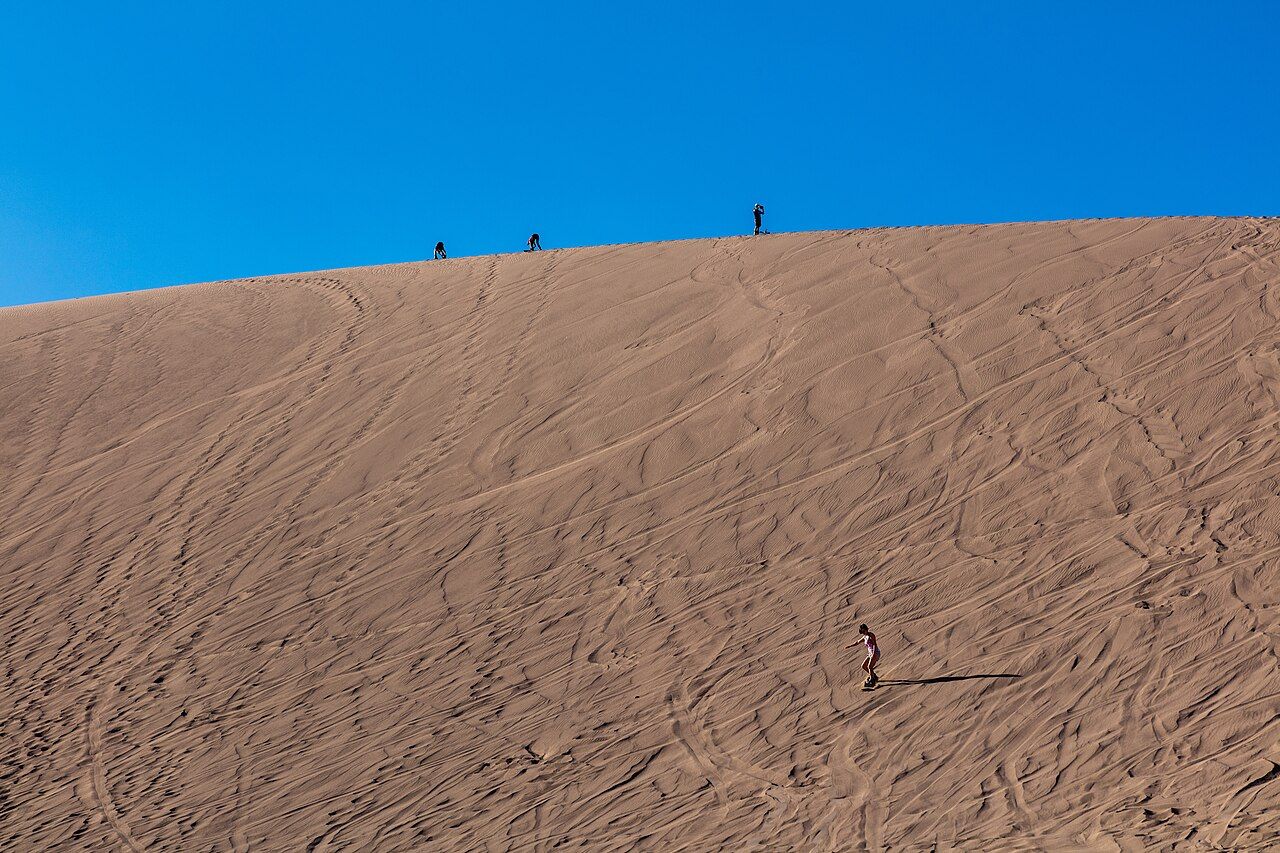
The largest sand slope is the reason many people come. It drops steeply from a ridge to the valley floor, long enough that people walking up it look like small dots against the sand.
The ridge walk
A path follows the ridge above the valley, giving views over the red walls, the sand slope and the green of the San Pedro oasis. Volcanoes stand along the eastern horizon, with Licancabur's cone the most obvious. The walk is not long, but it has climbs, loose ground and drops on either side. Wear closed shoes with grip, keep to the marked line and stay well back from crumbling edges.
At around 2,500 metres, effort feels harder than at sea level. Go slowly, especially in your first days in the area, and turn back if you feel dizzy, sick or short of breath. The guide to altitude, dry air and your body explains what to watch for.
Sandboarding in general
The long slope in Valle de la Muerte is one of the best-known places near San Pedro for sandboarding, which is a lot like snowboarding on sand. Boards are waxed so they slide, and riders carve or simply slide straight down. There is no lift; every run means climbing back up the slope, which at this altitude is a serious workout.
If you try it, start low on the slope until you know how the sand behaves. Wear long sleeves, sunglasses and a scarf or buff to protect your face from sand. Falls are usually soft but can still twist knees and wrists. Children and beginners need close supervision. Sand gets into everything, so keep cameras and phones zipped in a bag, and shake out your shoes before the ride home. A slow first run teaches more than a fast one.
Look up next: Licancabur, the volcano over town
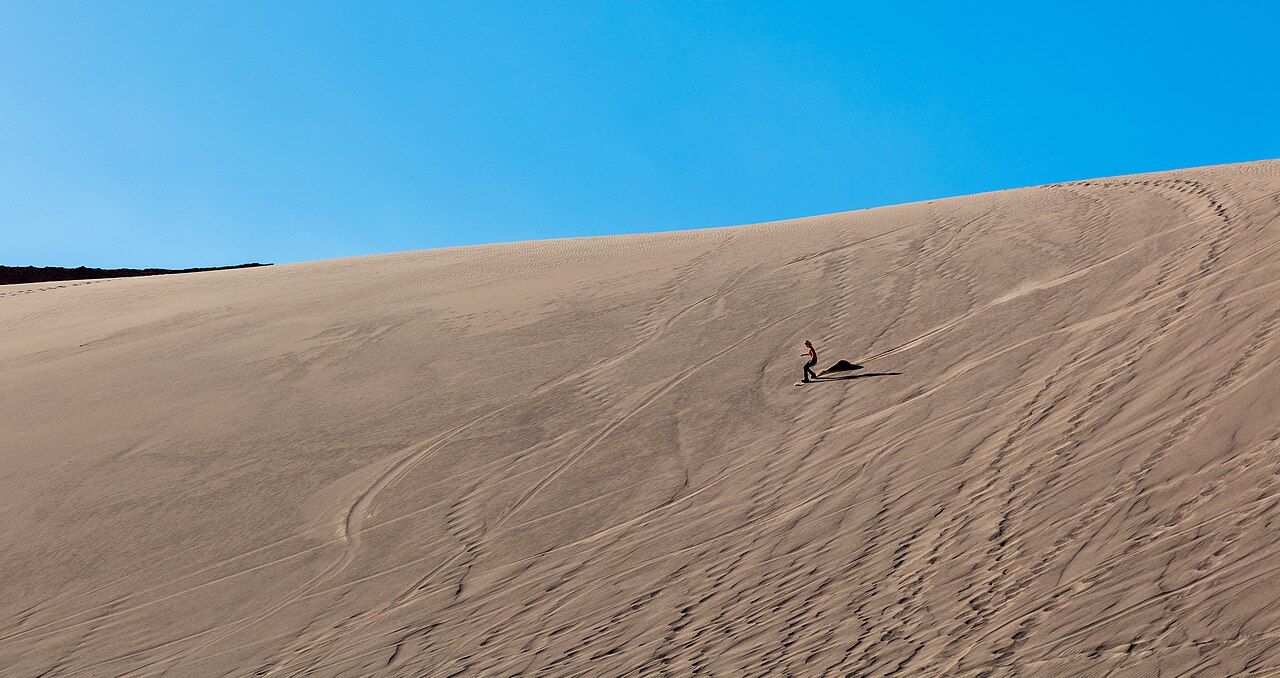
The sand is part of a protected landscape, so follow any rules about which areas are open for riding and which are closed to protect the slopes. Access arrangements for the valley have changed over the years, and there may be a fee and set hours. Ask locally how things stand before setting out.
Heat, sun and water
The valley floor gets very hot by midday, and the pale sand reflects sunlight up into your face. At this altitude the sun's ultraviolet rays are strong even when the air feels mild. Use high-factor sun cream, a wide hat and good sunglasses, and cover your shoulders.
There is no water in the valley. Bring enough for everyone in your group, plus extra if you plan to walk the ridge or sandboard. Drink before you feel thirsty, as the dry air pulls water from your body faster than you notice. Early morning and late afternoon are the most comfortable times to visit, with softer light and less heat.
- Bring plenty of water and some salty snacks.
- Protect skin and eyes from sun and sand.
- Avoid the hottest hours around midday.
- Keep an eye on anyone who looks pale, dizzy or confused.
Out along the ridge road
The valley lies just a few kilometres from the centre of San Pedro, close enough to reach by bike, though the road climbs and can be sandy in places. A car or a ride with someone who knows the area makes the trip easier in the heat. Follow signs and use only established tracks; driving across the desert crust leaves scars that last for decades.
Many people combine the valley with Valle de la Luna, which lies in the same range a little further west. If you do both in one day, start early, rest at midday and leave the second for the late afternoon light.
When the light goes
As the sun sets, the red walls glow and the volcanoes to the east turn pink. The temperature drops quickly once the sun is gone, so carry a warm layer even on a hot day. Leave the ridges before full dark; the path and edges are hard to judge by torchlight.
Once you are back on flat, safe ground away from town, the sky starts to fill with stars. Read why the Atacama sky is so clear to understand why the same dry air that bakes the valley at noon makes the night so sharp.