
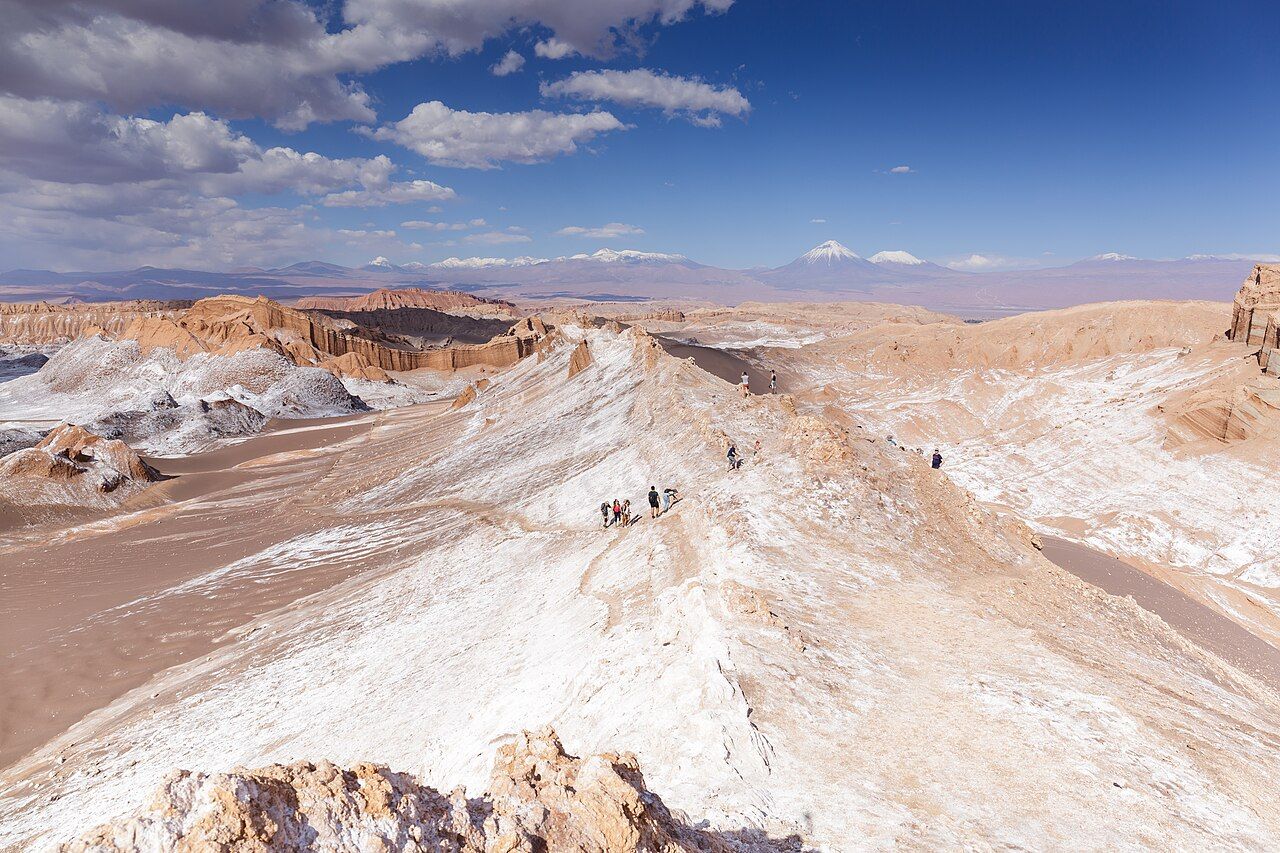
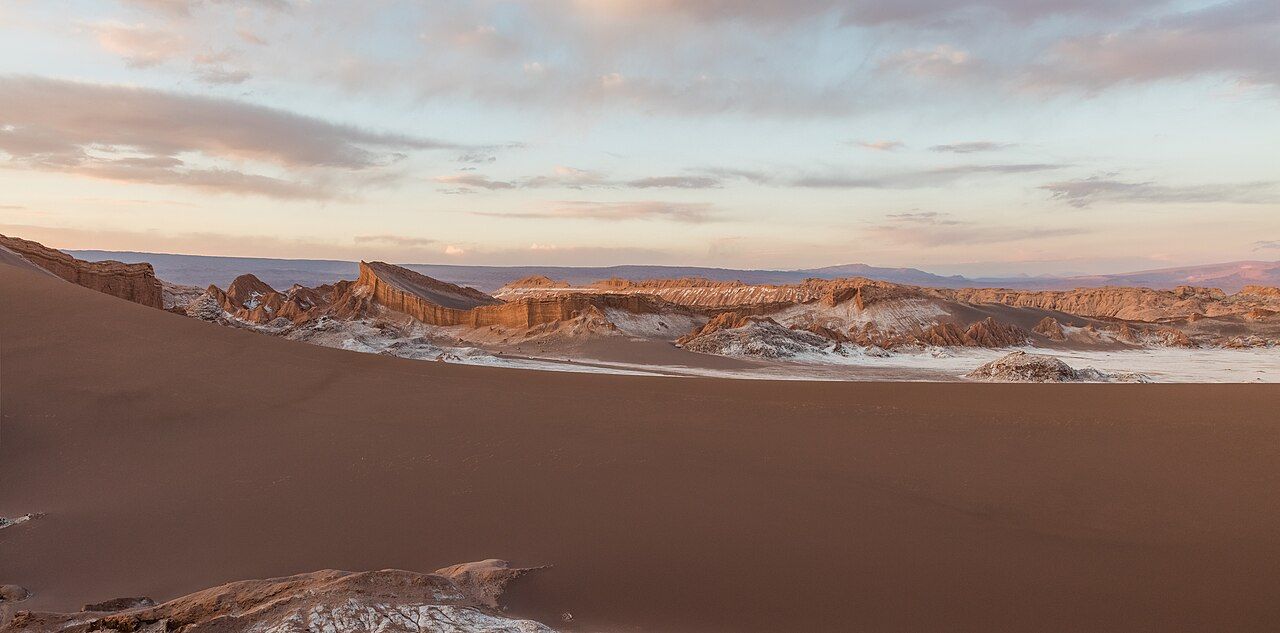
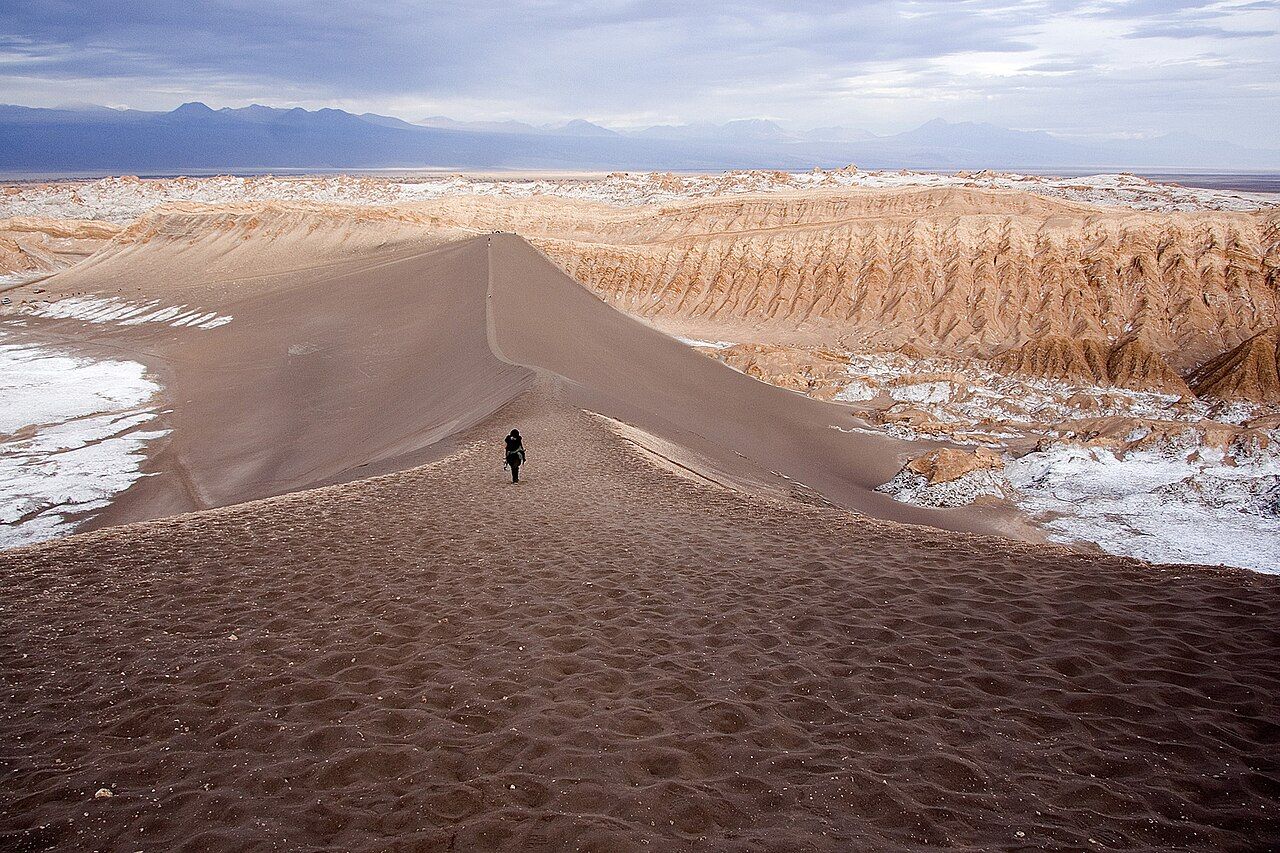
A short ride west of San Pedro de Atacama the road climbs into a range of low, crumpled hills called the Cordillera de la Sal, the salt mountains. Inside them lies Valle de la Luna, the Valley of the Moon. The name fits. Grey and ochre ridges fold into each other, white salt crusts the ground like frost, and a great sand dune leans against a cliff. At midday it looks harsh and bleached. In the last hour of light, it turns gold, then pink, then violet.
The valley belongs to the Los Flamencos National Reserve and is managed with the participation of local Lickanantay communities. Entry is controlled, there is a fee, and the hours generally run from morning until around sunset.
How the valley formed
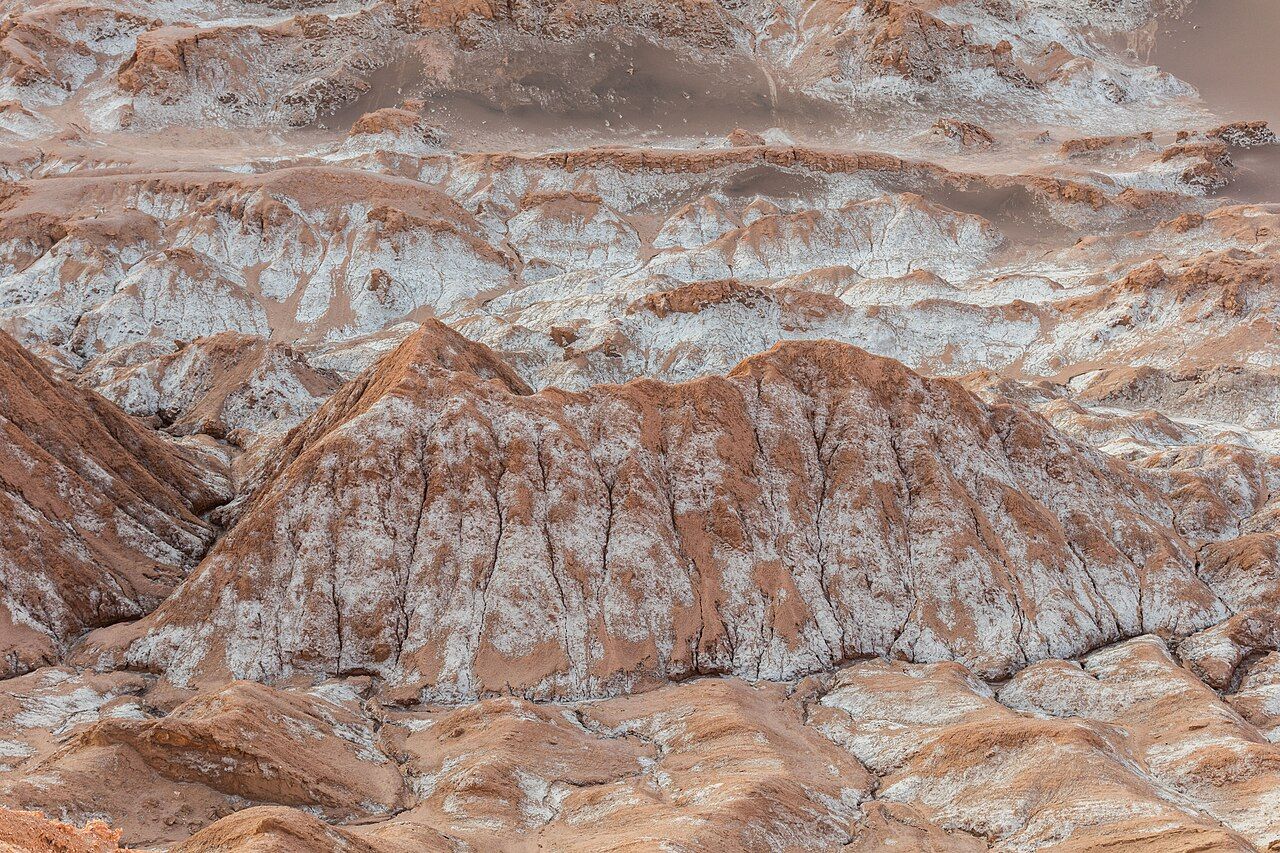
The Cordillera de la Sal is made of layers of clay, sand, gypsum and salt laid down in an ancient basin, then tilted and squeezed upwards as the Andes rose. Wind has worked on these soft rocks for a very long time, aided by the occasional rare rain that dissolves salt and carries it into new crusts. The result is a landscape of sharp crests, deep gullies and odd towers.
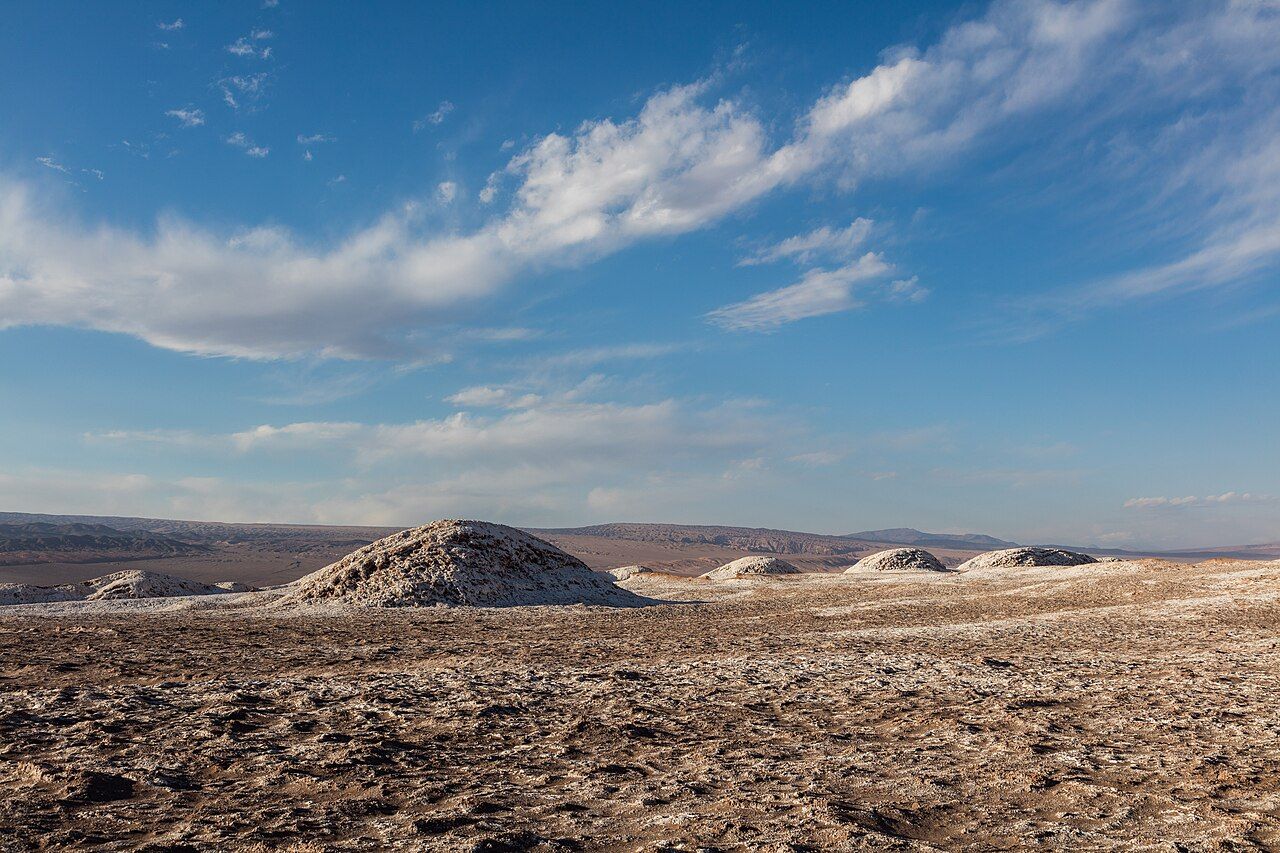
The salt is everywhere if you look closely. It glitters in the sun on the valley floor, lines cracks in the rock and forms brittle white skins over the clay. On some days, as the ground heats up or cools down, people report faint cracking sounds from the hills as the crust shifts. Stay quiet for a moment and listen.
The main stops
A road runs through the valley with several marked stops. Each has a short path or viewpoint, and together they make a good half day by car or a full afternoon by bike. Common highlights include:
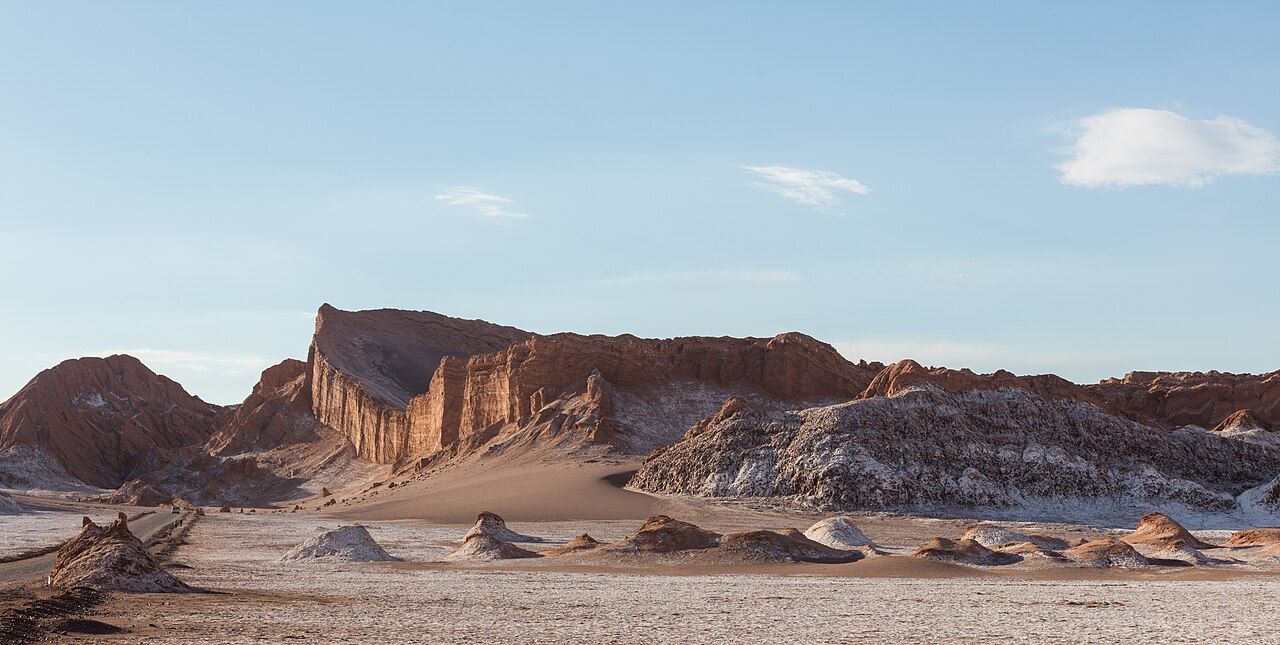
- The Duna Mayor: a huge sand dune banked against the ridges, with a marked path along the crest above it.
- The Amphitheatre: a curved wall of tilted rock layers that looks like the stands of a vast stadium.
- Las Tres Marías: a group of eroded salt and clay pillars that people have long compared to praying figures.
- Salt caves and canyons: narrow passages in the salt rock; some sections close at times for safety, so follow the signs on the day.
Paths are short but often sandy and uneven, and the sun reflects off the pale ground. Stay on marked trails; the crusts and ridges are fragile, and a footprint off the path can last for years.
Walking the ridge above the great dune
The most popular walk follows a sandy ridge above the Duna Mayor to a viewpoint over the whole valley. It is not long, but at around 2,500 metres even a gentle slope in soft sand leaves you breathing hard. Take it slowly, rest when you need to and carry water. The view from the top takes in the dune, the folded ridges and, on a clear day, the line of volcanoes to the east, including the cone of Licancabur.
At midday it looks harsh and bleached.
Walking on the dune itself is not allowed, and that rule protects the shape of the dune and the plants and creatures that live at its edges. Keep to the ridge path and enjoy the long view instead.
Look up next: The red valley and its great slope
Sunset and light
Most visitors aim to be in or near the valley at sunset. As the sun drops behind the Cordillera de la Sal, the volcanoes to the east catch the last light and glow orange and pink above the darkening desert. Inside the valley, the shadows stretch across the dune and the salt crusts turn soft blue.
Sunset spots can be busy, so arrive early and find a place away from the main group if you prefer quiet. Because the valley closes around dusk, you will usually need to start back as the light fades. Plan your timing with the gate rules in mind rather than hoping to linger.
Morning has its own appeal. The light is clear and the air cool, and there are often fewer people. If you plan to cycle, a morning start avoids the strongest heat and the afternoon winds.
Climbs, sand and the afternoon wind
The valley entrance lies a short drive west of San Pedro on a paved and gravel road. Many people cycle there, which is a fine way to arrive, but the route has climbs, sand and traffic, and the afternoon wind can be strong. Carry plenty of water, a repair kit and lights in case you are later than planned. By car, drive slowly on the gravel and park only in marked areas.
There is little shade inside the valley and no reliable source of water. Bring everything you need: water, snacks, sun cream, a hat and sunglasses, plus a warm layer for the drop in temperature after sunset. The guide to desert heat and desert cold explains how quickly the air changes once the sun goes.
Rules and respect
The valley is part of a protected reserve, and its rules exist to keep it as you see it. In general:
- Stay on marked paths and roads.
- Do not climb on fragile formations or walk on the main dune.
- Take all rubbish away with you.
- Do not collect salt, rocks or plants.
- Follow staff instructions on closing times and closed areas.
The land around San Pedro has deep meaning for the Lickanantay people, whose families have lived in these oases for many centuries. Treat the valley as a place cared for by its neighbours, not just a set. The story on the Lickanantay people and the land offers some background.
After the gates close
Once the valley shuts, the sky takes over. On the drive back, the ridges of the Cordillera de la Sal fade to black shapes against a deepening blue, and the first stars appear above the volcanoes. On a moonless night, by the time you reach town, the Milky Way may already be visible overhead. Pull off the road only where it is safe and legal to do so, and turn your headlights off while you watch.
If you want to pair a day in the valley with a night under the stars, check the moon phases and the best nights before you go, and read why the Atacama sky is so clear to know what you are seeing. The same dry air that bleaches the valley by day makes its sky so sharp after dark.